Why Toasting Spices Changes Their Aroma
Why toasting spices changes their aroma: learn what dry heat releases, how to toast whole spices attentively, and when to stop for a fuller, clearer scent.
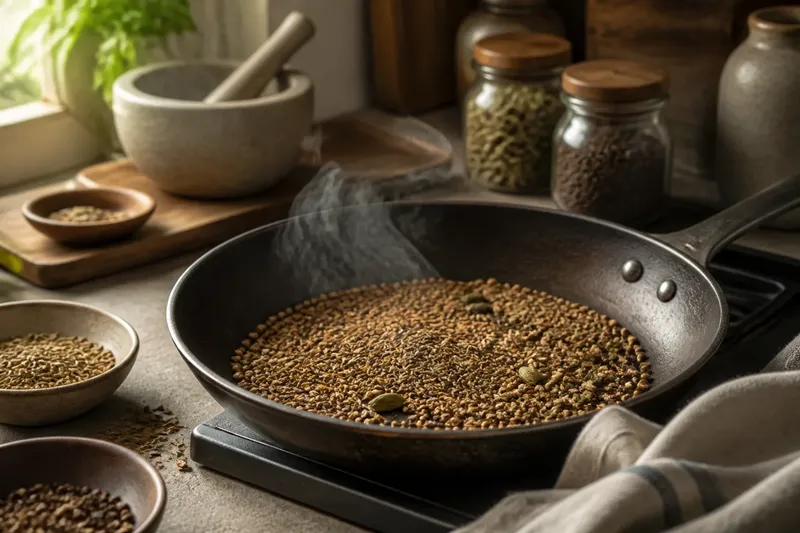
Why toasting spices changes their aroma becomes clear when a pan of whole cumin shifts from dusty and quiet to warm, earthy, and unmistakable. Gentle dry heat brings volatile aromatic compounds into the air and alters others, so the spice smells different before it ever reaches a dish. The change is gradual, but the useful window can be brief.
Toasting is not simply “more heat, more flavor.” The aim is to warm spices enough to make their aroma vivid without letting the pan’s hot spots scorch them. These five points explain what changes, how to pay attention, and how to use the result.
1. Dry heat makes aromatic compounds easier to notice
Whole spices contain many compounds that contribute to smell and flavor. Some are volatile, meaning they readily enter the air. As a spice warms, these compounds become easier to detect. That is why coriander seeds may smell faintly citrusy in a jar, then show a brighter, warmer fragrance in a skillet.
Heat also changes the balance among aromas. A raw spice can smell sharp, grassy, or woody; a toasted one may seem rounder or more savory. The spice has not become a different ingredient, but its aromatic character has shifted. That change can make it more noticeable in a dish, especially when the seasoning is added near the beginning of cooking.
Smell is an especially useful cue because it responds quickly. A gentle, pleasant fragrance suggests that the spice is warming. A harsh, acrid, or smoky smell signals that the pan has gone beyond the fragrant stage. Those cues are more helpful than waiting for every seed to become dark brown.
2. Whole spices reward brief, attentive heating
Whole spices heat differently from ground ones. A seed or pod has a surface exposed to the pan and an interior that warms more slowly. Ground spice has much more exposed surface area, so it can darken and scorch quickly. For this reason, dry-toasting is most forgiving with whole spices, such as cumin, coriander, fennel, mustard seed, or cardamom pods.
Begin with a clean, dry skillet and a modest amount of spice that can sit in a loose layer. Set the pan over low to medium-low heat. Keep the seeds moving by shaking the pan or stirring with a wooden spoon, and stay close enough to notice the aroma as it develops. There is no need to add oil: dry-toasting uses the pan’s heat alone.
The precise pace depends on the spice, pan, and burner. A thin skillet can develop hot spots quickly, while a heavier pan may warm more evenly. Treat the first scent as a prompt to pay closer attention, not as a signal to walk away. Remove the pan from the burner when the aroma is fragrant and distinct, before smoke or a burnt smell appears.
3. Movement and smell tell you more than color alone
Color can help, but it is not a reliable finish line for every spice. Pale coriander may release a clear, pleasant aroma without changing much in appearance. Smaller seeds can darken quickly, and a spice with a naturally deep color may show little visible change. Smell, sound, and the way the seeds move together give a fuller picture.
Listen for a light, occasional tick or pop if the spice naturally makes one, but do not wait for every seed to crackle. Some spices stay quiet. Stirring or shaking distributes heat and reduces the chance that the portion touching the pan will burn while the rest remains cool. If a few seeds leap or the aroma turns sharp, move the skillet off the burner at once.
Imagine you are warming coriander for a pot of vegetable soup. You spread the seeds in a dry skillet, keep them moving, and notice a citrusy, woody fragrance become more pronounced. You take the pan off the heat while the seeds still look mostly pale, then let them cool before crushing them. The observable result is a more distinct coriander aroma in the soup, rather than a smoky note from an unattended pan.
4. Cooling preserves the aroma you just developed
A hot skillet keeps cooking its contents even after it leaves the burner. To stop the process, transfer the spices to a cool plate or bowl rather than leaving them in the pan. Spread them out so heat can escape. Once they are cool, grind them if the recipe calls for ground spice, or use them whole.
Freshly toasted spices can be more aromatic than a jar of preground seasoning because grinding exposes more surface area to the air. That also means their most vivid scent can fade with storage. If you toast more than you need, cool the spices fully and keep them in an airtight container away from heat, light, and moisture. For the clearest aroma, toast a modest amount for the dish at hand.
Do not put warm spices into a sealed container. Trapped warmth can create condensation, which is unwelcome in a dry seasoning. Waiting until the spices feel cool to the touch is a simple kitchen cue that prevents that problem.
5. Choose a toasting method that suits the spice and dish
A skillet gives you close control and makes it easy to smell changes as they happen. It is a good choice for a small amount of whole spice. For a larger quantity, an oven can warm spices more evenly, but the aroma may be less immediate and a tray still needs attention. Whichever method you choose, low, steady heat is easier to manage than a rushed blast.
Not every spice needs dry-toasting. Some recipes add spices directly to oil, where their fat-soluble aromas disperse into the cooking fat. Others simmer whole spices in liquid, allowing their character to infuse the broth or sauce. These techniques serve different purposes: dry heat develops a fragrant, toasted character, while oil or liquid carries flavor through the dish in another way.
Ground spices are usually better added to a recipe as directed rather than dry-toasted in a bare pan. If a recipe calls for blooming ground spice in oil, follow that method and stir so the powder does not catch. Use the package label, recipe directions, and the manufacturer’s guidance for specialty equipment where they apply; local rules matter for food-handling requirements.
What should you know about toasting spices?
Can you toast spices in a nonstick pan?
A clean, dry nonstick skillet can warm whole spices, but use moderate heat and follow the pan maker’s care instructions. Avoid overheating an empty pan, and choose stainless steel or cast iron if you want a pan that tolerates more direct heat.
Should spices be washed before toasting?
Usually, dry pantry spices go straight into the pan. If a recipe or food-safety concern calls for rinsing, dry the spices thoroughly first; residual water changes dry-toasting into steaming and can make the pan splatter.
Can you toast mixed spices together?
You can, but only if the ingredients are similar in size and warm at a similar pace. When a mix includes tiny seeds alongside large pods or bark, toast the slower-heating pieces first and add the smaller ones later, or handle them separately.
What if toasted spices smell burnt?
Remove the pan from the heat and let the spices cool. If they smell acrid or smoky, discard them rather than trying to cover the taste with other ingredients; start again with a clean pan and gentler heat.
Let aroma guide the stopping point
Toasting spices is a small act of attention: warm them gently, keep them moving, and respond as their scent changes. That is why toasting spices changes their aroma without requiring a fixed timer or a dramatic color shift. Once the fragrance becomes clear and pleasant, take the pan off the heat. The result is a seasoning with a more expressive scent, ready to meet the rest of the dish without the bitterness of a forgotten skillet.