Lentils by Type: Matching Shape to the Dish
Choose lentils by type for soups, salads, and stews: learn which shapes stay distinct, which soften, and how to adapt your cooking plan.
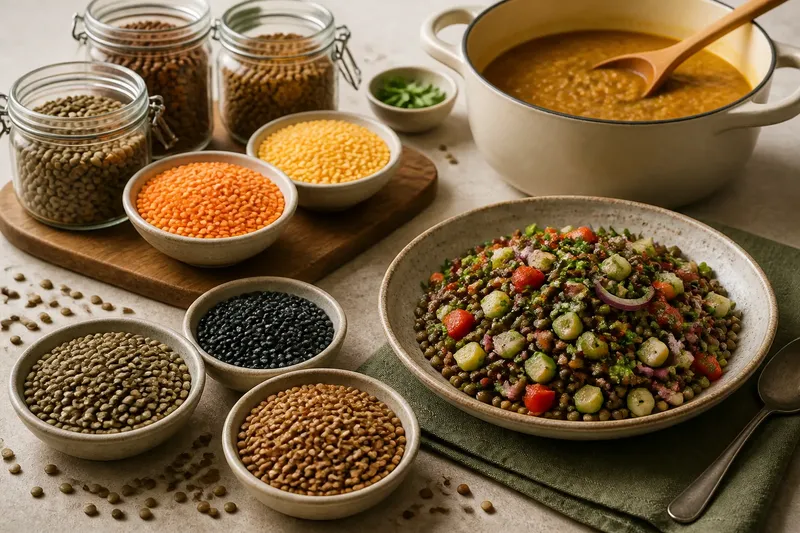
Choose lentils by type to get the texture your dish needs: intact bites for salads or a soft, thick base for soup. Whole lentils tend to hold their shape better than split ones, so their form is a useful first clue.
Check the package, too. Names and colors can overlap, and cooking directions vary. Treat any suggested cooking time as a starting point, then let the lentils’ texture guide you.
Choose the texture before the variety
For a salad, grain bowl, or side dish, choose lentils that can be drained and served in distinct pieces. For thick soup, puree, or soft stew, choose lentils that break down as they simmer. If you want both a substantial bite and a creamy base, combine a firm variety with a softer one.
Shape is a clue, not a strict rule. Skin, processing, and cooking all matter. A crowded pot or vigorous boil can break tender lentils apart, while a gentle simmer gives you more control over a firm finish.
Match lentils by type to the dish
- French green lentils: Small, dark green lentils that typically stay firm. Use them in warm salads, lentil sides, or any dish where distinct bites matter.
- Black beluga lentils: Tiny, dark lentils that often keep a neat shape. They suit salads and grain bowls, where their appearance contrasts with pale grains and vegetables.
- Brown lentils: A mild, earthy all-purpose choice. Whole brown lentils can work in soups, stews, and patties; simmer gently if you want the pieces to hold together.
- Green lentils: This broad label covers products with different sizes and textures. Inspect the lentils and package directions; smaller, intact ones are often a better choice for salads than large or damaged ones.
- Red and yellow lentils: Often sold split, they tend to soften into a thick mixture. Use them for dal, smooth soups, or sauces where a creamy texture matters more than distinct pieces.
- Split lentils: “Split” describes how the lentil was processed, not one particular color or recipe. Without the intact whole form, split lentils generally soften faster and thicken liquid more readily.
Labels can vary, especially for broad terms such as “green lentils.” When texture matters, inspect the contents and follow the package directions.
Cook lentils according to their shape
- Sort and rinse. Spread the dry lentils on a plate, remove any small stones or damaged pieces, and rinse them in a fine-mesh strainer under cool water.
- Check whether soaking is recommended. Many common lentils do not need soaking, but a particular product may have different directions. If you soak them, begin checking tenderness earlier than you otherwise would.
- Choose a pot and liquid. Use a saucepan with enough room for the lentils and liquid to move freely. Water leaves you room to season later; broth adds flavor. For firm lentils you plan to drain, use enough liquid to cover them comfortably.
- Simmer gently. Bring the liquid to a boil, then reduce the heat until it bubbles softly. A hard boil can jostle lentils and split their skins before the centers reach the texture you want.
- Check the center. Taste a lentil as it cooks. For salad, stop when it is tender but still holds its outline. For soup or dal, continue until it yields easily and starts to merge with the liquid.
- Finish for the dish. Drain firm lentils when they reach the right texture. For a soft preparation, stir and let some break down. Add warm lentils to dressing if you want them to absorb it; cool them first to help keep greens and crisp vegetables fresh.
Say you have French green lentils for a warm salad, but the recipe calls for red lentils. The starting point is a bag of whole French green lentils and a desired salad with distinct bites. Rinse and sort them, simmer them gently in water, and taste as they cook; drain them once they are tender but still hold their outline. The expected result is a salad with separate lentils, not the creamy base split red lentils would create. If the recipe depends on a thick coating, switch to split red or yellow lentils instead; the tradeoff is losing the salad’s distinct lentil pieces.
Use the package and texture to adjust your plan
Older or unusually dry lentils may take longer to soften, while split lentils can become tender quickly. Check their texture rather than relying on a clock alone. If the liquid disappears before a firm variety is tender, add hot water or broth. If a soft variety thickens too much, stir in liquid until it reaches the consistency you want.
Season with the recipe in mind. For a simple pot, season the liquid to taste and adjust at the end. If the dish includes tomatoes, vinegar, or citrus, follow the recipe’s sequence; acidic ingredients can change how quickly lentils soften. When the package gives no guidance, avoid adding a large amount of acid early.
If you will reheat lentils in soup or sauce, cook them slightly firmer than you want to serve them. They can absorb liquid and soften as they sit. When appropriate, store cooked lentils with a little cooking liquid to help keep them from drying out.
Which lentil works for your dish?
Which lentils hold their shape best?
French green and black beluga lentils are common choices when distinct pieces matter. Whole brown or green lentils can also work, depending on the product and how gently you cook them.
Which lentils thicken soup?
Split red or yellow lentils soften readily and help thicken soup as they break down. To keep some pieces intact, add cooked whole lentils near the end.
Can you substitute one lentil type for another?
Yes, if you account for the change in texture and cooking plan. Firm whole lentils will not create the same soft body as split lentils, while split lentils will not make a salad with intact, separate bites.
Do lentils need to be soaked?
Many common lentils can be cooked without soaking, but package directions vary. Check the label, then use texture rather than elapsed time as your final guide.
Check these details before choosing
- Look for intact whole lentils if you want separate bites; if most are split or damaged, choose another bag or plan to use them in a soft soup.
- Check whether the package says whole or split; if split, use them for a thick dish, or choose whole lentils for a salad.
- Inspect the lentil size and shape; if the pieces look small and intact, consider them for a salad, but if they look large or uneven, choose a forgiving soup or stew.
- Read the package’s soaking directions; if soaking is recommended, follow them and begin checking tenderness early, or choose a product whose directions fit your schedule.
- Check whether the recipe needs a creamy base; if it does, choose split red or yellow lentils, but if it needs distinct bites, choose a firm whole variety.
- Check whether you plan to drain the lentils; if so, cook a firm variety in enough liquid to cover it, or choose a soft preparation that can absorb the cooking liquid.
For lentils by type, start with the finished spoonful you want: separate and pleasantly firm, or soft enough to thicken what surrounds it. Choose whole French green, beluga, or suitable brown lentils for distinct pieces, and split red or yellow lentils for a creamy base. If a package label leaves you unsure, inspect the lentils and use their texture as your guide.