A Shared Supper with Guests Arriving in Waves
A shared supper for guests arriving in waves keeps food welcoming with make-ahead components, a flexible serving plan, and one quick final assembly.
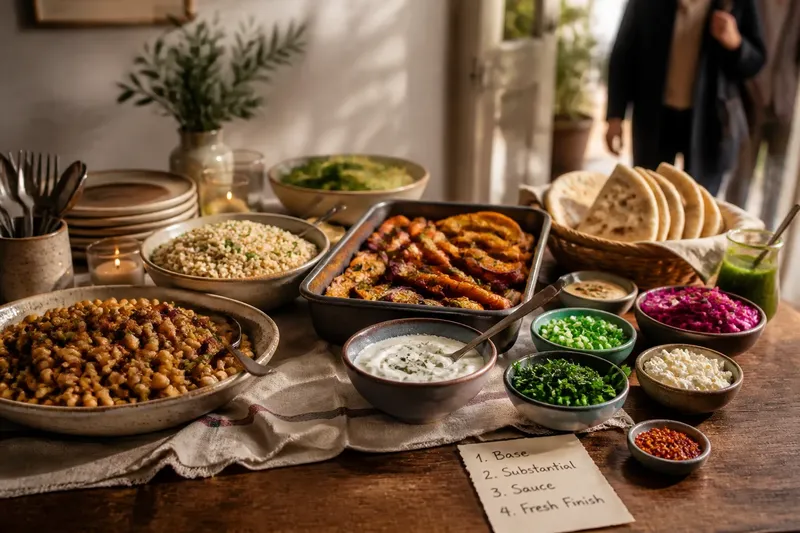
A shared supper for guests arriving in waves works best when the meal can wait without looking or tasting forgotten. Set out sturdy components that guests can combine as they arrive, then finish each serving with a small, quick assembly rather than holding every dish for one grand moment.
What kind of meal suits guests who arrive at different times?
Choose a meal built from separate parts, not a single dish that depends on everyone sitting down together. A pot of beans, a tray of roasted vegetables, warm flatbread, and bowls of crisp toppings can become a filling plate at different moments. Guests serve themselves when they are ready, while the food still feels like one shared supper.
This format also gives people room to eat lightly or make a fuller plate. Keep the main components recognizable and easy to combine. A grain or bread, a substantial protein, vegetables, and one bright sauce are often enough; extra sides can add work without making the meal more welcoming.
Say you are hosting a casual evening and one friend arrives early while another is delayed. You could set out chickpeas cooked with onions, roasted carrots, pita, yogurt sauce, and chopped parsley. The early guest can make a small bowl, and the later guest can assemble a fresh one from the remaining components without asking you to restart dinner.
Which components can be prepared ahead?
Make ahead the foods that hold their character well: beans, grains, roasted vegetables, braises, dips, dressings, and sauces. They can be served at room temperature when appropriate or warmed in manageable portions. Keep tender greens, cut fruit, toasted nuts, and other fragile toppings separate so they stay pleasant until serving.
Think in terms of components rather than finished plates. A pot of rice can sit covered while a sauce waits in a jar; roasted squash can be arranged on a platter shortly before guests arrive. Label containers if several people are helping, and place serving spoons with the foods they belong to.
- Make ahead: beans, cooked grains, braised meat, dips, and sturdy sauces.
- Prepare but hold separately: chopped herbs, sliced scallions, grated cheese, and crunchy toppings.
- Finish close to serving: delicate greens, dressed salads, crisped bread, and hot components that lose appeal as they sit.
For foods that require careful storage, reheating, or service, follow the package directions, manufacturer guidance, or applicable local food-safety advice. Keep the plan simple enough that you can pay attention to guests instead of juggling a crowded counter.
How should the final assembly work?
Make the last step small and repeatable. It might be warming tortillas, spooning sauce over a bowl, adding fresh herbs, or placing a hot topping beside a room-temperature base. Avoid a finish that requires every dish to be hot at precisely the same time.
Decide what stays in the kitchen and what goes on the table. Keep backup portions covered, and replenish the serving dishes in modest amounts. That makes the food look inviting and leaves you a clean reserve if later guests are hungry. A small pitcher of sauce and a bowl of toppings can also let each person tune a plate to taste.
Write the assembly order on a scrap of paper if you have several parts: base, substantial topping, sauce, fresh finish. This is not a recipe timetable; it is a reminder that lets you step away from the stove and return without reconstructing the plan.
How can the table stay welcoming between arrivals?
Make the table easy to read. Put plates and utensils together, group foods by how they are used, and leave room for people to set down a drink. A small card naming a dish can help guests with unfamiliar ingredients, while a separate spoon for each serving bowl keeps the spread orderly.
Refresh the parts that benefit from it, not the whole table. Replace wilted herbs, add a little more bread, or bring out a clean bowl of salad. Keep the meal’s core components available, and let the finishing details change as the evening unfolds. If someone arrives late, offer a clear path to a plate without turning the moment into an apology.
What questions come up when planning a staggered supper?
Should I serve food as soon as the first guest arrives?
Offer a modest snack or a small first plate if people are hungry, then keep the main components ready for self-assembly. This avoids making early guests wait while also preserving enough food for those still on their way.
What foods are awkward to leave out?
Delicate fried foods, dressed greens, and dishes that depend on a crisp texture are less forgiving than beans, braises, dips, or roasted vegetables. Keep vulnerable items separate and bring them out in smaller batches when they suit the meal.
How do I make the meal work for different appetites?
Offer a few distinct components so guests can choose their own proportions. A filling base, vegetables, a protein-rich dish, and a flavorful sauce give people options without requiring separate meals.
What if a guest arrives after the main food has been served?
Set aside a covered portion of the core components before opening the serving dishes. When the guest arrives, warm or assemble that portion as needed and add fresh toppings, so it feels like a proper plate rather than leftovers scraped together.
How much food should remain in reserve?
Plan for a little flexibility rather than trying to predict each arrival exactly. Keep some of the main component and bread or grain back in the kitchen, then watch how quickly the table empties. If the meal is running low, offer a simple addition such as fruit, cheese, or a bowl of olives instead of reshaping the whole menu.
A shared supper for guests arriving in waves is less about keeping every plate identical than giving each person an easy way into the meal. When the sturdy parts are ready and the final assembly is brief, the host can welcome someone at the door, point out the food, and return to the conversation with dinner still in good shape.